

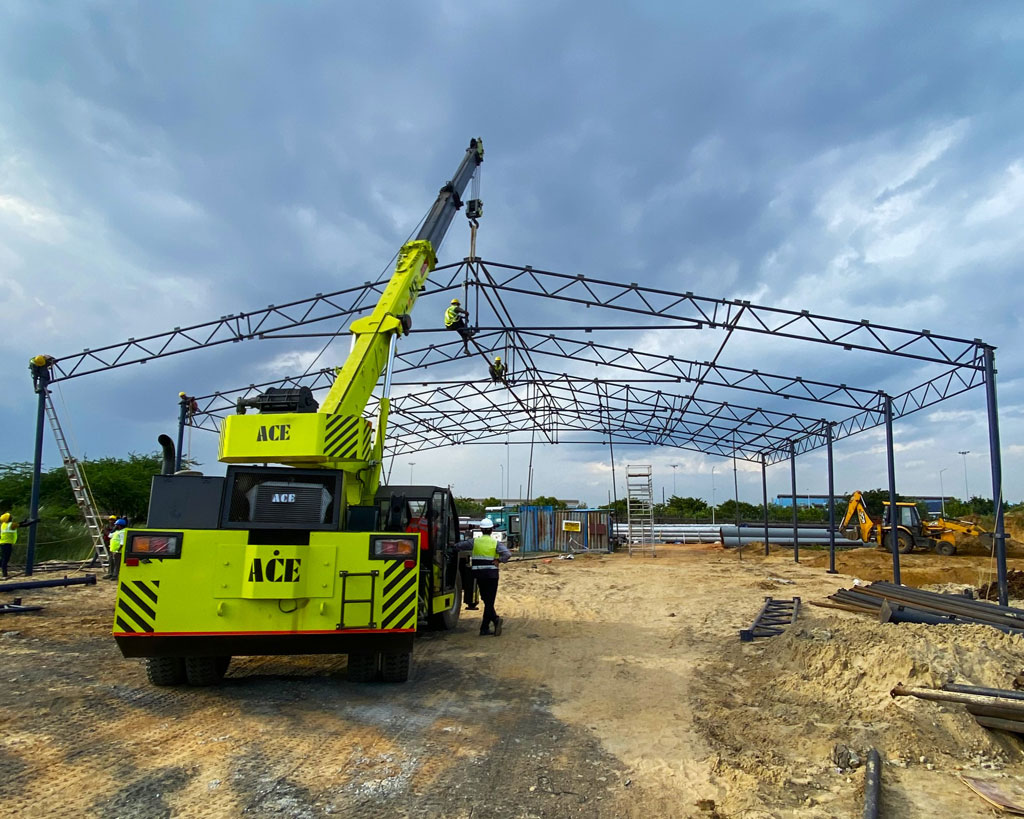
Business growth rarely follows a straight line. New projects, seasonal demand, plant expansions, infrastructure upgrades, or large contracts often create sudden storage requirements that permanent warehouses cannot accommodate quickly or cost-effectively.
This is where temporary warehousing becomes a strategic solution.
Temporary warehouses offer flexible, scalable, and fast-to-deploy storage infrastructure designed specifically for short-term, high-impact operational needs. For companies in manufacturing, logistics, construction, infrastructure, and large projects, temporary warehousing plays a critical role during transition and expansion phases.
Understanding Project-Based and Expansion Phase Storage Needs
What Are Project-Based Storage Requirements?
Project-based storage arises when businesses undertake:
- New manufacturing lines or facility upgrades
- EPC, infrastructure, or construction projects
- Large government or private contracts
- Equipment mobilization or material staging
- Temporary production overflow
These projects typically have fixed timelines, uncertain volumes, and location-specific needs.
What Happens During Expansion Phases?
During expansion phases, companies often face:
- Production capacity increases before permanent infrastructure is ready
- Delays in civil construction or approvals
- Sudden inventory buildup
- Temporary redistribution of goods
- Testing of new markets or regions
In both cases, committing to a long-term warehouse can be financially inefficient and operationally restrictive.
Why Permanent Warehouses Fall Short in These Scenarios
Permanent or leased warehouses are not always ideal during short-term or transitional phases because they involve:
- Long lock-in periods
- High capital or rental commitments
- Time-consuming construction
- Fixed layouts with limited flexibility
- Location constraints
For time-bound projects or interim expansions, businesses need speed, flexibility, and cost control—not rigidity.
What Is Temporary Warehousing?
Temporary warehousing refers to engineered, modular storage structures that can be rapidly deployed on-site or off-site for a defined duration. These warehouses are designed to handle industrial-grade storage while allowing easy installation, expansion, relocation, or dismantling.
They are commonly used for:
- Project inventory storage
- Expansion overflow storage
- Seasonal or surge demand
- Equipment and raw material holding
- Temporary logistics hubs
Key Benefits of Temporary Warehousing for Projects & Expansion
1. Rapid Deployment
Temporary warehouses can be installed within days or weeks, allowing businesses to:
- Start operations immediately
- Avoid project delays
- Maintain production timelines
This speed is critical when project schedules are tight.
2. Cost-Efficient for Short-Term Use
Since temporary warehouses:
- Avoid civil construction
- Operate on flexible rental models
- Reduce upfront capital expenditure
They are significantly more economical for project-duration storage needs.
3. Scalability and Flexibility
Temporary warehouses can be:
- Expanded or reduced as volumes change
- Customised in height, length, and layout
- Relocated once the project ends
This makes them ideal for uncertain demand patterns common in expansion phases.
4. On-Site Storage Advantage
Placing storage close to:
- Project sites
- Manufacturing plants
- Assembly areas
Reduces material handling time, transportation cost, and operational inefficiencies.
5. Industrial-Grade Protection
Modern temporary warehouses offer:
- Weatherproof structures
- Ventilation and clear-span design
- Safety and compliance standards
- Suitability for heavy materials and equipment
They are built to handle demanding industrial environments.
Industries That Commonly Use Temporary Warehousing
Temporary warehousing is widely adopted across industries such as:
- Manufacturing and engineering
- Construction and infrastructure
- Logistics and 3PL operations
- Automotive and heavy equipment
- Oil & gas and energy projects
- Agriculture and seasonal storage
Any business facing temporary spikes in inventory or space constraints can benefit.
Use Cases: Where Temporary Warehousing Delivers Maximum Value
Manufacturing Expansion
When production ramps up before permanent facilities are ready, temporary warehouses store raw materials, WIP, or finished goods without interrupting operations.
Project Inventory Storage
Large projects require safe storage of materials, machinery, and spares near the site to ensure smooth execution.
Seasonal or Contract-Based Demand
Temporary warehouses help businesses meet peak demand without over-investing in permanent space.
Relocation or Facility Upgrades
During renovations or relocations, temporary storage prevents downtime and protects inventory.
Temporary Warehousing vs Permanent Warehousing (For Expansion Needs)
|
Factor |
Temporary Warehousing |
Permanent Warehousing |
|
Setup Time |
Very fast |
Slow |
|
Capital Investment |
Low |
High |
|
Lock-in Period |
Flexible |
Long-term |
|
Scalability |
High |
Limited |
|
Project Suitability |
Ideal |
Often inefficient |
What to Consider Before Choosing a Temporary Warehouse
To maximise value, businesses should evaluate:
- Duration of the project or expansion
- Storage volume and material type
- Location and site conditions
- Safety and compliance needs
- Expansion or relocation flexibility
Choosing the right temporary warehousing partner ensures smooth execution without operational risk.
Conclusion: A Strategic Tool for Growth Phases
Temporary warehousing is no longer a stop-gap solution—it is a strategic infrastructure choice for modern businesses navigating project-based work and expansion phases.
By offering speed, flexibility, scalability, and cost efficiency, temporary warehouses enable companies to:
- Execute projects without delays
- Scale operations confidently
- Control costs during growth phases
- Stay agile in uncertain market conditions
For businesses planning projects or expansions, temporary warehousing provides the space needed today—without limiting tomorrow.